Finding the Right Activities for Kids With Special Needs
Finding the Right Activities for Kids With Special Needs: Why Adaptive Swimming Is Worth Exploring
Finding extracurricular activities for your kids should be exciting. Whether it's soccer, dance, gymnastics, or swimming, there are plenty of opportunities for children to learn new skills, make friends, and build confidence outside the classroom.
But for parents of children with special needs, finding the right fit isn't always that simple.
A traditional class might move too quickly. A busy environment might create sensory challenges. Or an activity that works well for other children might not offer the flexibility or individual attention your child needs to be successful.
For families navigating autism, ADHD, developmental delays, sensory differences, or physical disabilities, the search for inclusive activities can come with a few extra considerations.
The good news? There are more options than you might think, including a few you may not have considered.
Why Finding Inclusive Activities Can Be Challenging
Every child deserves the opportunity to participate in activities they enjoy. But many traditional extracurricular programs are designed around a fairly standard approach to teaching.
Children are often expected to follow group instructions, learn at a similar pace, and adapt to the environment around them.
For some kids, that's no problem. For others, those expectations can become barriers to participation.
Parents searching for special needs activities or autism-friendly programs may find themselves asking a different set of questions before signing up:
- Will the instructor understand how my child communicates and learns?
- Can the activity accommodate sensory sensitivities or physical limitations?
- What happens if my child needs extra time or individual attention?
- Will my child feel comfortable and included?
These are important questions, and the answers can make all the difference between an activity that becomes a positive part of a child's routine and one that simply isn't the right fit.

What to Look for in Activities for Children With Special Needs
Whether you're considering adaptive sports, music classes, art programs, or other enrichment activities, there are a few qualities worth looking for.
Individualized instruction. Children learn in different ways, and the ability to adjust teaching methods can make an activity more accessible. Some children benefit from visual demonstrations, while others may need repetition, shorter instructions, or additional time to practice.
A flexible environment. New environments can be overwhelming, particularly for children with sensory sensitivities or anxiety. Programs that allow children to become comfortable at their own pace can help make new experiences more enjoyable.
Opportunities to build confidence. Success doesn't have to look the same for every child. Learning a new skill, participating independently, or simply becoming more comfortable with an activity can be meaningful progress.
Instructors who are willing to adapt. The right instructor recognizes that a one-size-fits-all approach doesn't work for everyone. Being patient, flexible, and open to learning about a child's individual needs is just as important as knowing how to teach the activity itself.
Ultimately, the goal isn't simply to find an activity your child can participate in. It's to find an activity where they have the opportunity to grow.
Have You Considered Adaptive Swimming?
When parents think about extracurricular activities for children with autism, ADHD, or other special needs, swimming might not be the first thing that comes to mind.
In fact, for some families, the pool may seem like an especially challenging environment. Water on the face, unfamiliar sounds, busy classes, and the physical demands of swimming can all present obstacles.
But swimming is also a highly adaptable activity, and the right instruction can make a big difference.
Unlike many traditional sports, swimming doesn't require children to keep up with teammates, follow a fast-moving game, or compete against others. Lessons can be structured around individual abilities, comfort levels, and goals.
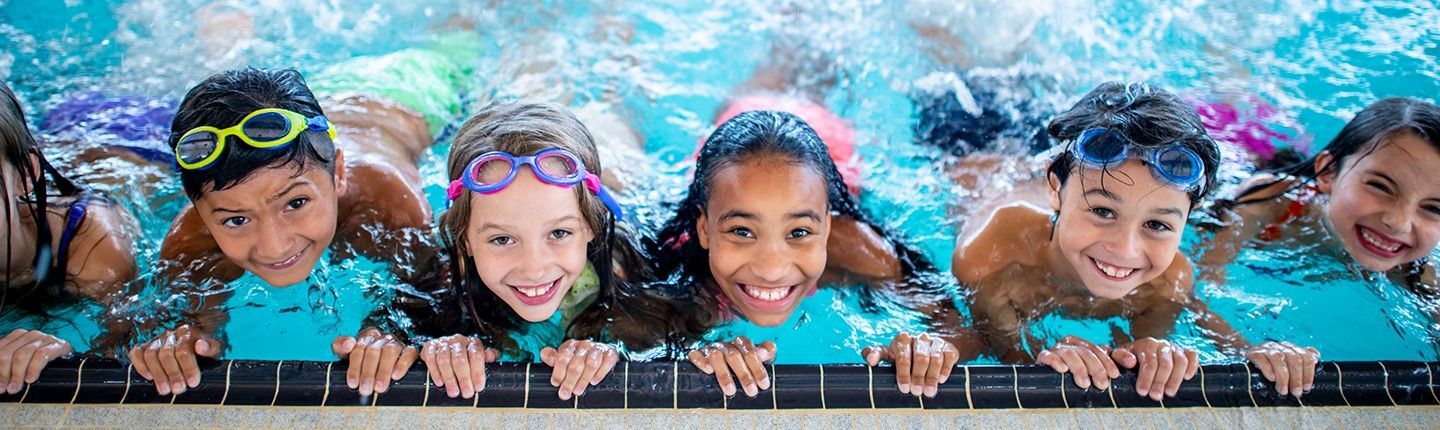
It's also an opportunity to develop important water safety skills while building confidence and becoming more comfortable in the water.
For children who haven't found the right fit in traditional group activities, adaptive swim lessons may offer another path worth exploring.

A Different Approach to Swim Lessons
At Kids First Swim School, we believe swimming should be an opportunity for children of different abilities and learning styles.
That's why we've partnered with Swim Angelfish®, a program specializing in adaptive swim instruction for individuals with developmental, cognitive, physical, and sensory differences.
The Swim Angelfish approach recognizes that every swimmer brings their own strengths, challenges, and learning preferences to the pool.
Rather than expecting children to adapt to a traditional lesson structure, instructors adapt their teaching techniques to the individual swimmer.
Our adaptive swim lessons provide 30 minutes of dedicated, one-on-one instruction, giving instructors the flexibility to adjust activities, communication, and pacing throughout each lesson.
For a child with autism, that might mean using demonstrations or repetition to introduce a new skill. For a child with ADHD, it might mean adjusting the pace and structure of activities. For a child with sensory sensitivities, it might mean spending additional time becoming comfortable with different parts of the pool environment.
The goal is the same: help each child develop swimming and water safety skills in a way that works for them.
Progress Looks Different for Every Child
One of the most important things to remember when exploring adaptive activities is that progress doesn't have to follow a specific timeline.
For one child, success might mean floating independently for the first time. For another, it might mean putting their face in the water, following a new instruction, or becoming comfortable entering the pool.
These moments may seem small, but they can represent meaningful steps toward greater confidence and independence.
At Kids First, our Swim Angelfish lessons are designed to meet swimmers where they are today while helping them work toward their individual goals.
And because water safety is an important part of swimming, instruction can also focus on skills like safely entering and exiting the pool, understanding water safety instructions, and developing greater awareness around water.
While swim lessons are an important part of water safety education, children still require close adult supervision whenever they're in or around water.
Finding the Right Fit for Your Family
If you've spent time searching for sensory-friendly activities, adaptive sports, or extracurricular programs for children with special needs, you already know that finding the right fit can take some trial and error.
Not every activity will work for every child, and that's okay.
The important thing is finding programs that recognize your child's individual strengths and are willing to work with their unique needs.
Swimming might be one of those opportunities, even if it hasn't felt like an option in the past.
Through our partnership with Swim Angelfish, Kids First Swim School is helping make individualized swimming instruction more accessible to families looking for something beyond traditional group lessons.
Interested in learning whether adaptive swimming could be a good fit for your child?
Explore Swim Angelfish Adaptive Swim Lessons at Kids First Swim School and connect with our team to learn more about the program, ask questions, and find a participating location near you.