Swim Angelfish® Adaptive Swim Lessons
Swim lessons designed around your child's needs
Finding the right activity for your child can take some trial and error, especially when traditional classes or group activities aren't a great fit. If your child needs additional support, learns differently, or takes more time to become comfortable in a new environment, adaptive swimming may be worth exploring.
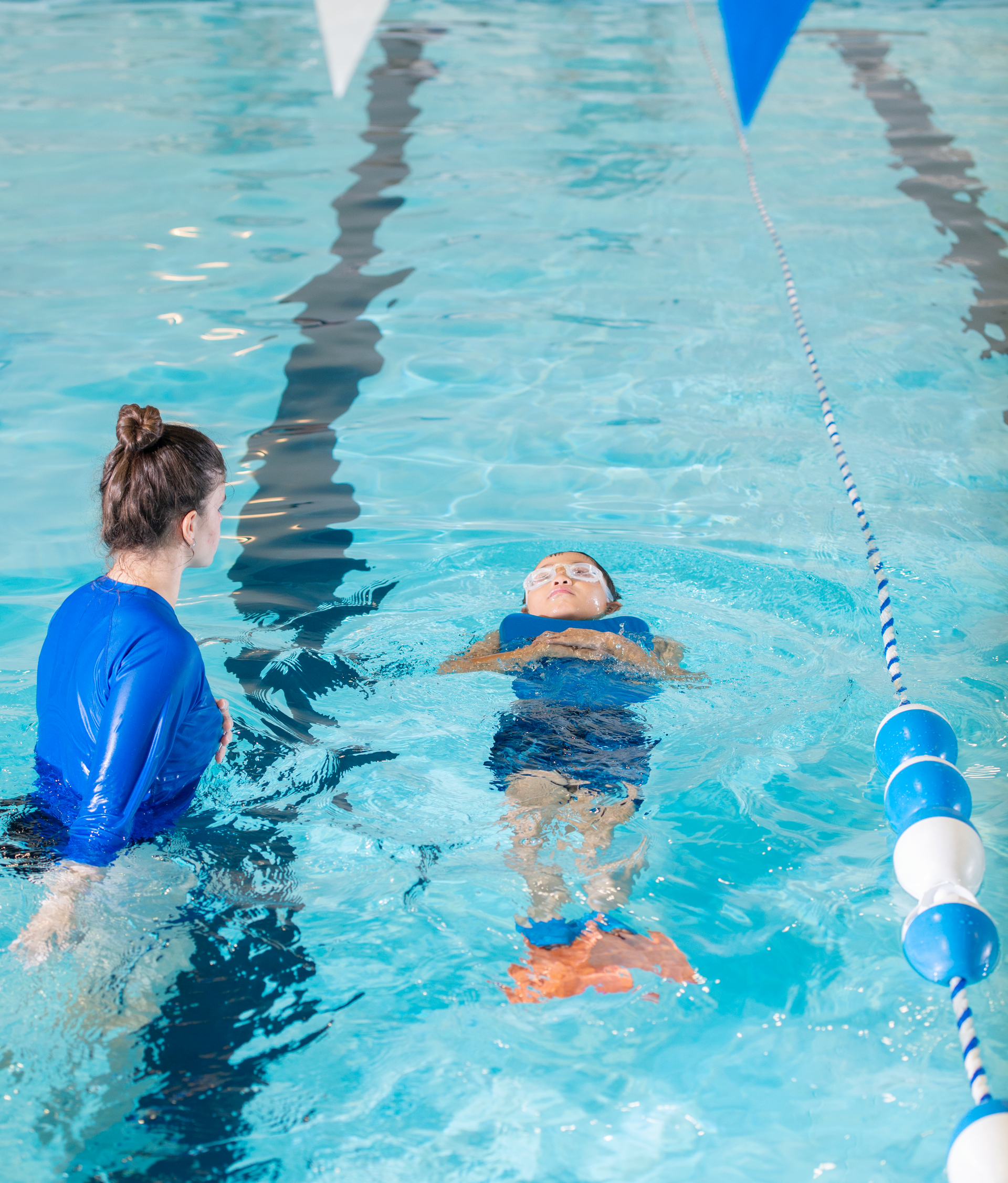
Kids First Swim School offers Swim Angelfish® adaptive swim lessons for children who benefit from a more individualized approach to learning in the water. Our instructors use the Swim Angelfish methodology to adjust their teaching approach to each swimmer's abilities, communication style, comfort level, and goals.
These are one-on-one, 30-minute lessons that give your child dedicated attention while working on swimming skills and water safety.
Whether your child is new to swimming, needs additional support learning new skills, or hasn't found the right fit with traditional lessons, we'd be happy to talk with you about the program.
Ready to learn more?
Contact Kids First Swim School to discuss enrollment.
Who are adaptive swim lessons for?
Every child comes to swimming with different experiences and needs. Some are eager to jump into the pool, while others need more time to get comfortable. Some follow verbal instructions easily, while others benefit from demonstrations, repetition, or a different way of communicating.
Swim Angelfish® adaptive lessons may be a good option for children with:
- Autism and other neurodevelopmental differences: Individualized instruction can help accommodate different communication styles, learning preferences, and comfort levels.
- ADHD and attention differences: A one-on-one setting gives the instructor more flexibility to adjust activities, pacing, and instruction.
- Sensory needs: Children who are sensitive to splashing, water on their face, unfamiliar sounds, or other parts of the pool environment may benefit from a more individualized approach.
- Developmental delays: Lessons can be adapted to a child's current abilities, with time to practice skills and work toward appropriate goals.
- Physical disabilities and motor challenges: Instructors can adjust activities and teaching techniques based on the swimmer's individual abilities.
- Anxiety or discomfort around water: Some children need additional time and support before they feel ready to try unfamiliar swimming skills.
These are examples, not a checklist your child needs to meet. If you're unsure whether adaptive swim lessons are appropriate for your family, our team can help you learn more about the program.
What makes adaptive swim lessons different?
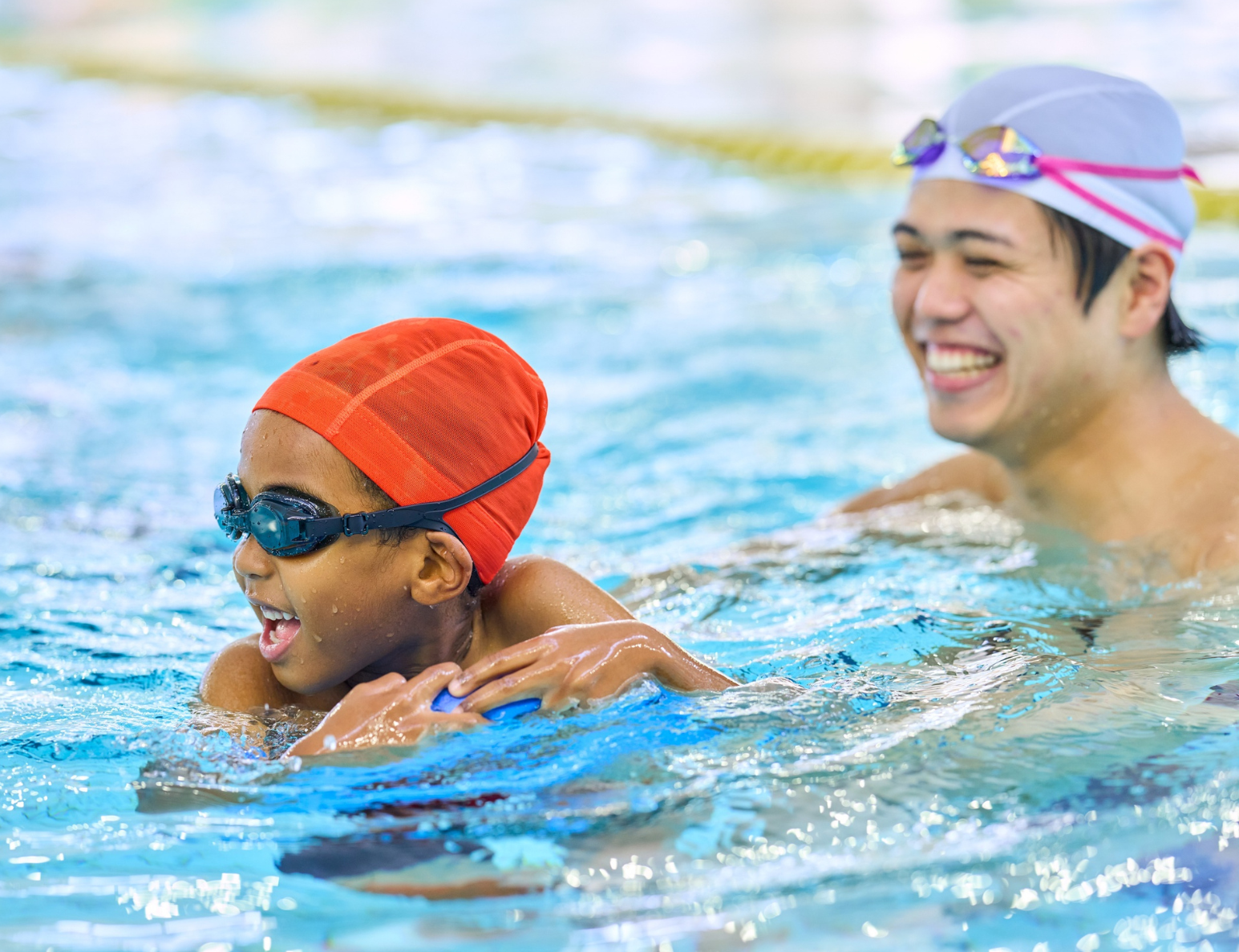
In a traditional group lesson, an instructor divides their attention among several swimmers. That format works well for many children, but some swimmers benefit from having an instructor focused on them throughout the lesson.
With Swim Angelfish® adaptive instruction, the instructor can make adjustments as the lesson progresses. If a swimmer needs more time to practice a skill, the instructor can spend more time there. If a particular explanation isn't working, they can try another approach.
Lessons may incorporate different communication techniques, demonstrations, repetition, modified activities, or changes in pacing based on the swimmer's needs.
Parents can also share information about what helps their child feel comfortable and learn. Knowing a child's preferences, challenges, and interests can help the instructor find a productive starting point.
The goal is to work on swimming and water safety skills in a way that takes the individual swimmer into account.
What will my child learn?
Lesson goals depend on your child's current swimming ability, comfort level, and individual needs. Some children are ready to work on basic swimming movements, while others may need to become more comfortable in the water before moving on to new skills.
Depending on the swimmer, lessons may focus on:
- Becoming more comfortable in the pool
- Learning how to enter and exit the water safely
- Practicing floating and body positioning
- Developing swimming movements and coordination
- Following pool safety instructions
- Building water awareness and confidence
- Working toward greater independence in the water
Progress looks different for every child, so lessons are adapted to the swimmer rather than following a single timeline.
Water safety is an important part of the process. Swimming lessons can help children develop valuable skills, but no lesson or program can eliminate the risk of drowning. Active adult supervision remains essential whenever children are in or around water.
What is Swim Angelfish®?
Swim Angelfish® specializes in adaptive aquatics and provides a methodology for teaching swimmers with a range of developmental, cognitive, physical, and sensory differences.
The approach recognizes that a teaching technique that works for one swimmer may not work as well for another. Instructors learn strategies for adapting communication, activities, and instruction to help swimmers work toward their individual goals.
Through its partnership with Swim Angelfish®, Kids First Swim School offers families another option when looking for swim lessons that accommodate their child's needs.
Frequently Asked Questions
Let's find the right starting point for your child
If you've been looking for swim lessons for a child with autism, activities for a child with ADHD, sensory-aware instruction, or swimming lessons for a child with developmental or physical differences, adaptive swimming may be another option to consider.
You know your child best. Tell us a little about their experience with the water and what you're hoping they can work toward, and we'll help you understand how the program works.
Locations
- Cherry Hill, NJ
- Plymouth Meeting PA
- York PA
- Dundalk MD
- Hunt Valley MD - Coming Soon to this Location*
- Rockville MD
- Midlothian VA -Coming Soon to this Location*
- Charleston SC
Have More Questions?
Have a question? We’re here to help. Send us a message and we’ll be in touch.